
NBA History of Science Seminar: Bretislav Friedrich
Bretislav Friedrich (Fritz Haber Institute of the Max Planck Society, Berlin), “(Some) Experiments that Lined the Path to Quantum Physics”
The bulk of the experiments leading to quantum physics produced a backlog of data awaiting explanation—the spectrum of He⁺ (1896) and the black-body spectral distribution (1900) being cases in point. Accumulating quality data in the face of ignorance was a dominant research mode. The Stern-Gerlach experiment (1922) took a different approach: it tested whether the assumptions of quantum theory, as embodied in the Bohr-Sommerfeld-Debye model, were correct. To the disappointment of Otto Stern, who devised the experiment, they were.
After establishing his molecular-beam laboratory in Hamburg (1924), Stern conceived “an experiment of the greatest fundamental significance”—planned before the work of Davisson and Germer—to test whether a beam of atoms and molecules exhibits wave-like properties, as proposed by Louis de Broglie. The experiment confirmed de Broglie’s relation for the wavelength of matter waves quantitatively to about 1% accuracy, providing compelling evidence for wave-particle duality (1929–1932). Between 1932 and 1937—in Hamburg “under the sword of Nazism” and then in his Pittsburgh exile—Stern investigated the proton’s magnetic dipole moment. Rather than one nuclear magneton, he found a value roughly 2.5 times larger. As Stern recalled: “While measuring the magnetic moment of the proton, I was scorned by theorists, as they believed they knew what the result would be.” Stern’s result upended Dirac’s conclusion that the proton was a point-like particle like the electron, revealing instead that it had an internal structure. Stern’s experiment, alongside the near-contemporaneous discovery of the positron, became a cornerstone of particle physics.
Stern’s work vindicated the imperative to test theoretical assumptions experimentally, no matter how plausible they may seem. Or, as Edgar Meyer put it: “No experiment is so dumb that it should not be tried.”
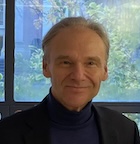
Bretislav Friedrich is a Research Group Leader (Emeritus) at the Molecular Physics Department of the Fritz Haber Institute of the Max Planck Society in Berlin and Honorary Professor at the Technical University Berlin. Besides his research in molecular physics (directional states of molecules, quantum computing, analytic solvability, structure of solvated molecular complexes), he maintains an abiding interest in the history of science (emergence of quantum mechanics, the rise of physical and theoretical chemistry, scientific biography) and is engaged in efforts to eliminate chemical and other weapons of mass destruction. With a keen interest in scientific publishing, he has served in a variety of editorial capacities prior to assuming his current position as Academic Executive Editor of Wiley's flagship open-science journal Natural Sciences. He also serves as the founding co-editor of the Springer Series History of Physics.
Bretislav Friedrich was born in Prague, Czech Republic. He graduated from Charles University (1976) and received his PhD in chemical physics from the J. Heyrovsky Institute of Physical Chemistry and Electrochemistry of the Czech Academy of Sciences (1981). He was an Alexander von Humboldt Fellow at the Max Planck Institute in Göttingen (1986–1987) and Research Associate and later Senior Research Fellow and Lecturer at Harvard University (1987–2003). In 2011, he was elected Foreign Member of the Societas Scientiarum Bohemica (Czech National Academy) and in 2025 member of the Czech-American Comenius Academic Club.