
NBA History of Science Seminar: Emilie Skulberg
Emilie Skulberg (Niels Bohr Archive), “The History of Black Hole Imaging: Evidence and the Aesthetics of Absence”
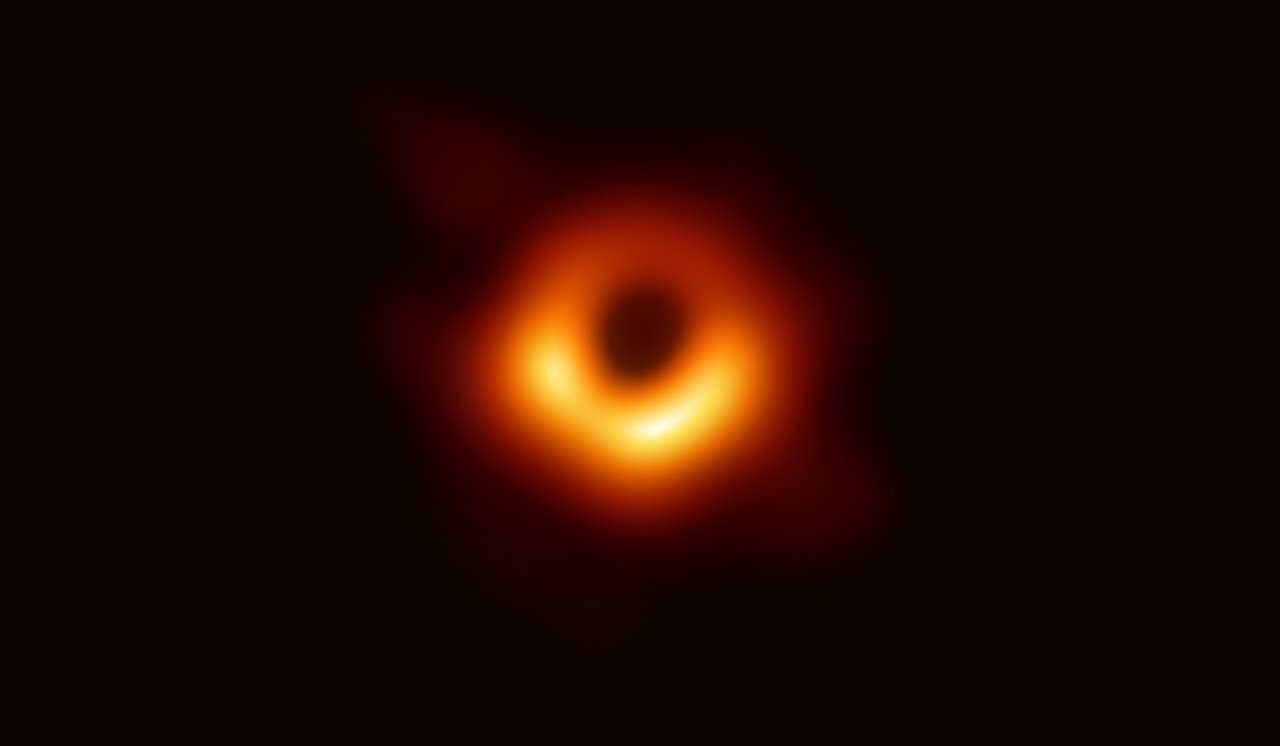
In 1978, astrophysicist Jean-Pierre Luminet carefully drew the space around a black hole based on a simulation he had made. Using techniques he had learned when making artworks, he stressed that his illustration was “realistic” as he aimed to convince astronomers that black holes were real. This is one among several examples of the interchange between aesthetics and questions surrounding the existence of black holes. This talk focuses partly on the role aesthetics played in arguments for the existence of black holes—how imaging the absence of light was thought of as evidence; and partly on the role aesthetics played in the reception of the first image from observation of the shadow of a black hole in 2019 (see figure). This image, I argue, did not only become an icon because of the widespread appreciation of the results, but also because of the disappointment some audiences felt when seeing the image. Finally, the talk compares the kind of absence we encounter in black hole imaging with other roles absence can play in scientific work and argumentation.
Digital interactive images tied to a separate project related to black hole imaging can also be found on the website of the Niels Bohr Archive: https://nbarchive.ku.dk/resources/coloring-black-holes/.

Emilie Skulberg is a postdoc at the Niels Bohr Archive. The focus of her research is the representation of scientific objects, concepts, and frameworks that are challenging to represent, particularly in the recent history of astrophysics and in the history of environmental and climate science.